
Earning High Quality Backlinks From Authoritative Sites: A Guide
Introduction
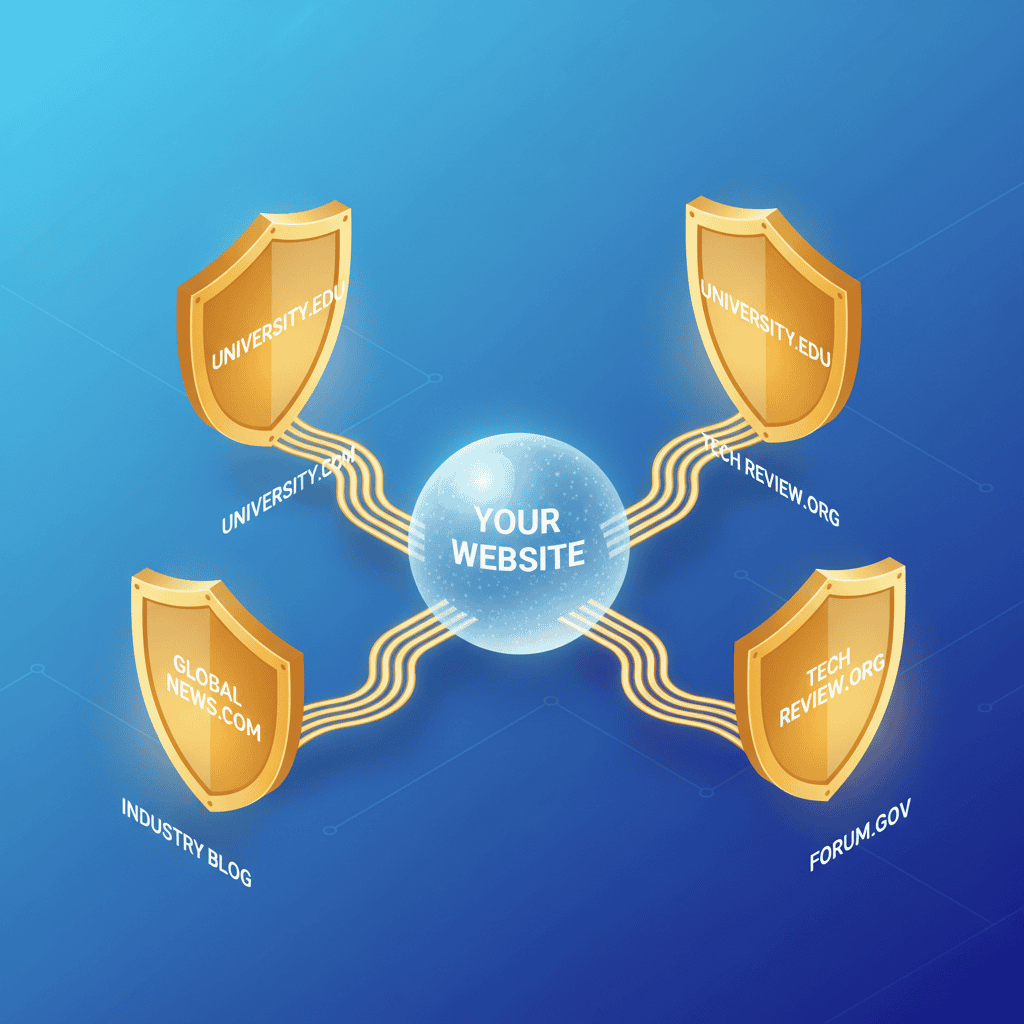
In the evolving landscape of Search Engine Optimization (SEO), one truth remains absolute: not all links are created equal. As we navigate 2026, the algorithm has become smarter, more nuanced, and significantly more ruthless regarding link quality. The days of blasting thousands of directory submissions are long gone. Today, success hinges on earning high-quality backlinks from authoritative sites that demonstrate genuine trust and relevance.
I have spent years analyzing search patterns and helping businesses in Mumbai and beyond refine their digital presence. My approach has always been data-backed and devoid of shortcuts. When you secure a link from a site with high E-E-A-T (Experience, Expertise, Authoritativeness, and Trustworthiness), you are not just getting a vote for your content; you are borrowing a piece of that site’s reputation. This guide deconstructs exactly how to identify these opportunities and secure them without risking penalties.
Key Takeaways
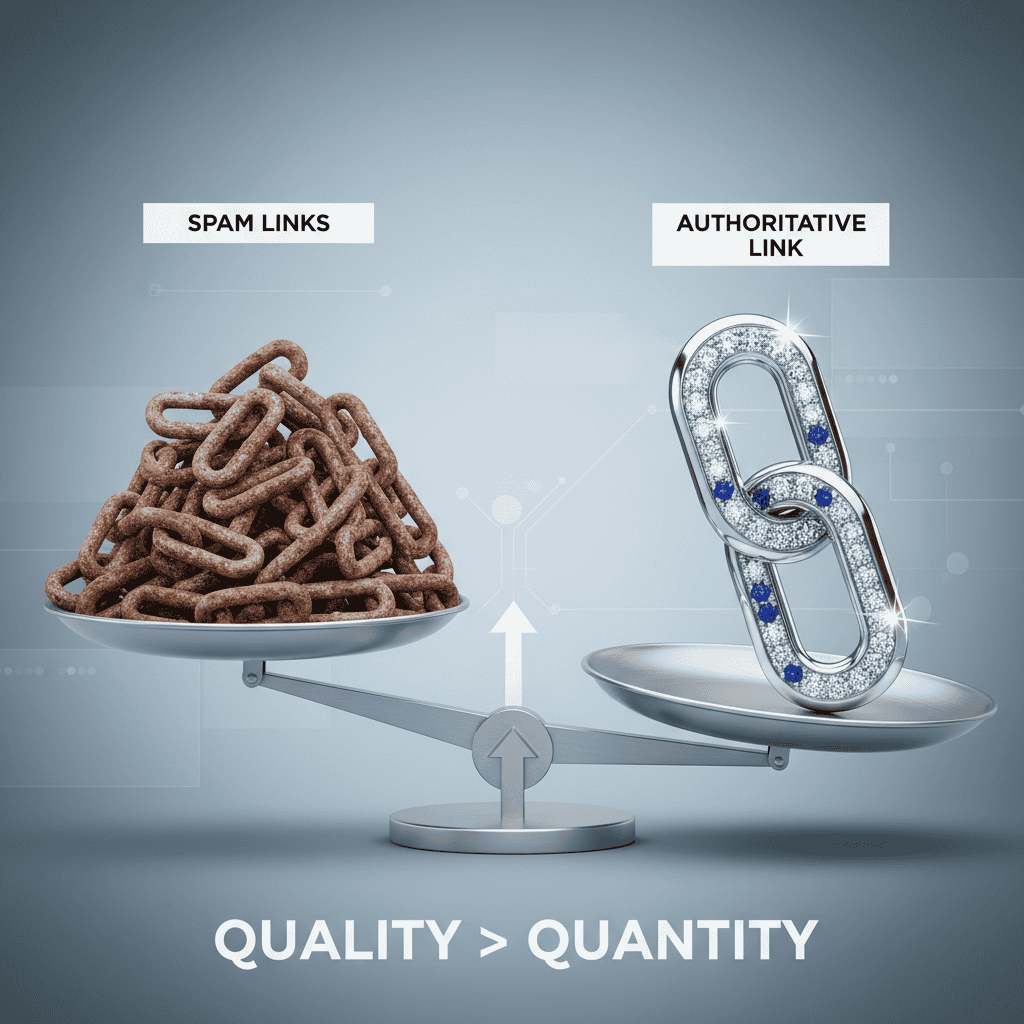
- Quality Over Quantity: One link from a Domain Authority (DA) 70+ site often outweighs dozens of low-tier links.
- Relevance is Critical: Google prioritizes links from thematically related domains over random high-authority sites.
- E-E-A-T Alignment: Backlinks serve as a primary signal for Google’s trust algorithms.
- Risk Mitigation: Understanding spam scores and toxic links is essential to protect your rankings.
Defining High Quality and Authoritative Sites
Before we execute outreach strategies, we must define what “authoritative” actually means in the eyes of a search engine. It is not merely a feeling; it is a measurable set of metrics and signals.
Core Metrics: DA, DR, and PA
While Google does not publish a “Domain Authority” score, third-party tools have developed sophisticated proxies that correlate highly with ranking potential. Understanding these metrics helps us prioritize our efforts.
| Metric | Definition | Good Score Benchmark | Best Use Case |
|---|---|---|---|
| Domain Authority (DA) | Developed by Moz, this predicts a root domain’s ranking potential (1-100). | 70+ for broad niches 50+ for hyper-local/niche |
General site vetting and list prioritization. |
| Domain Rating (DR) | Ahrefs’ metric measuring the strength of a target website’s backlink profile (0-100). | DR 70+ indicates significant ranking power. | Competitive analysis and gap identification. |
| Page Authority (PA) | Moz’s score for a specific page’s ability to rank. | PA 50+ | Deciding which specific page to target for a link. |
| Spam Score | Indicates the percentage of sites with similar features that have been penalized. | < 5% | Risk assessment before outreach. |
The Role of E-E-A-T in Link Evaluation
Google’s Search Quality Evaluator Guidelines emphasize that high-quality sites must demonstrate E-E-A-T. When an authoritative site links to you, it acts as a citation of your own expertise. Google’s SEO Starter Guide explicitly warns against schemes and emphasizes that the best links are those given freely by other sites because they find your content valuable.
If you are a business owner in India targeting a global market, earning a backlink from a recognized industry leader (like a major trade association or a university) validates your business entity in the Knowledge Graph. This is far more valuable than a generic blog comment.
Strategic Acquisition Methods for 2026
Earning these links requires a shift from “link building” to “relationship building” and “value exchange.” Here are the strategies I use to help clients secure placements on high-tier domains.
1. HARO and Journalist Outreach
Help a Reporter Out (HARO), now part of Cision’s Connectively, remains one of the most effective ways to earn editorial links from news outlets. Journalists constantly need expert quotes for their stories. By providing insightful, data-backed commentary, you can secure mentions on sites like Forbes, The New York Times, or industry-specific publications.
My Process for HARO Success:
1. Monitor Queries: Set up alerts for keywords related to your industry.
2. Speed Matters: Respond within the first 30 minutes of a query being posted.
3. Provide Value: Do not pitch your business. Answer the journalist’s question directly with a unique statistic or expert opinion.
4. Credentialing: Briefly state why you are qualified to answer (e.g., “As an SEO consultant with 10 years of experience…”).
2. Competitor Backlink Gap Analysis
Why reinvent the wheel when your competitors have already vetted the landscape? By analyzing the backlink profiles of your top competitors, we can identify authoritative sites that are already linking to businesses like yours.
According to strategies for building backlinks outlined by industry experts, reverse-engineering these profiles often reveals “low-hanging fruit”—sites that are predisposed to link to your niche but haven’t discovered you yet.
Steps to Execute:
1. Use a tool like Ubersuggest or Ahrefs to pull a competitor’s backlink report.
2. Filter for DR 60+ and Dofollow links.
3. Identify the context of the link (Guest post? Resource page? News mention?).
4. Create superior content and reach out to the same publisher.
3. Broken Link Building
This is a classic “white-hat” strategy that adds value to the web. You find a broken link (404 error) on an authoritative site, create a resource that replaces the missing content, and ask the webmaster to swap the dead link for yours.
- Why it works: You are helping the webmaster fix a user experience error on their site.
- Targeting: Look for resource pages on .edu or .gov sites, as these carry immense authority.
Navigating Risks: Quality Assurance
Not all high-DA sites are safe. In my SEO Consulting Services, I often see clients who have been burned by purchasing links from “link farms” that look authoritative on the surface but are actually toxic.
Identifying Toxic “Authority” Sites
Just because a site has a DA of 60 does not mean it is safe. If a site exists solely to sell links, Google will eventually devalue it.
Red Flags to Watch For:
* “Write for Us” pages that explicitly mention pricing.
* Irrelevant Content: A “health” blog linking to gambling or crypto sites.
* No Editorial Standards: Articles that are clearly AI-generated with no human oversight.
If you suspect your site has accumulated toxic links, you may need to perform a backlink audit. Moz’s Link Building Guide suggests that while disavowing is a powerful tool, it should be used with caution and only when you have a manual action or a clear case of algorithmic suppression.
Dofollow vs. Nofollow
Many authoritative sites (like Wikipedia or major news outlets) use rel="nofollow" or rel="sponsored" tags. Do not discard these opportunities.
| Attribute | Link Juice Passed? | SEO Value | Strategic Value |
|---|---|---|---|
| Dofollow | Yes | High direct impact on rankings. | Primary target for authority building. |
| Nofollow | No | Indirect (Traffic + Trust signals). | Diversifies profile; drives referral traffic. |
| Sponsored | No | Compliance with FTC/Google rules. | Essential for paid placements to avoid penalties. |
Measuring ROI from Backlinks
Clients often ask, “How do I know this link worked?” We must look beyond vanity metrics. A truly high-quality backlink should impact your bottom line, not just your Moz score. In my experience, the best indicators are an increase in Referral Traffic and a lift in rankings for the target page’s primary keywords.
For a deeper dive into technical metrics, the ultimate guide to backlinks by Authoritas provides excellent frameworks for tracking link velocity and profile health over time.
Frequently Asked Questions (FAQ)
1. What is the minimum DA score for a “high quality” backlink?
Generally, a Domain Authority (DA) of 70+ is considered excellent for broad niches. However, for highly specialized local businesses, a DA of 40-50 from a hyper-relevant local news site can be just as valuable. Context always trumps raw numbers.
2. How long does it take for backlinks to improve rankings?
There is no fixed timeline, but typically, you might see movement within 4 to 10 weeks after the link is indexed. This depends on the crawling frequency of the linking site and the competitiveness of your keywords.
3. Are backlinks from .edu and .gov sites better?
Yes, typically. These Top-Level Domains (TLDs) are restricted to accredited institutions and government bodies, making them harder to manipulate. Google tends to trust these domains implicitly, so a link from them passes significant authority.
4. Should I buy backlinks to save time?
No. Buying links violates Google’s Spam Policies. While it might offer a temporary boost, it exposes your site to manual penalties that can take months or years to recover from. Focus on earning links through content strategy and outreach instead.
5. How many backlinks do I need to rank on Page 1?
This varies wildly by industry. A local bakery might only need 5-10 good links, while a financial software company might need hundreds. The focus should be on the quality gap between you and your competitors, not an arbitrary number.
Conclusion
Earning high quality backlinks from authoritative sites is the cornerstone of a sustainable off-page SEO strategy. It requires patience, excellent content, and a willingness to build genuine relationships within your industry. By focusing on relevance, E-E-A-T, and clean acquisition methods, you protect your site from future algorithm updates while building a brand that deserves to rank.
If you are struggling to gain traction or need a personalized roadmap for your link-building efforts, feel free to contact me. Let’s build an authority profile that drives real growth for your business.





Great read, very well presented. I love how useful this whole website is.