Managing Online Reputation and Sentiment
In the digital age, your brand’s standing isn’t just about what you say; it is about what the internet proves. Managing online reputation and sentiment has evolved from a simple public relations task into a complex legal and strategic necessity. As an SEO consultant who has navigated the shifts in search algorithms and regulatory landscapes, I have seen firsthand how the rules of engagement have changed.
Gone are the days when you could simply “bury” negative feedback or buy a few hundred likes to boost your social proof. Since the Federal Trade Commission (FTC) finalized its rule on consumer reviews in late 2024, the stakes have never been higher. Today, a single misstep in how you handle reviews can lead to significant financial penalties and a total loss of consumer trust. This guide will walk you through the essential frameworks for maintaining a pristine, compliant, and high-ranking online presence.
The New Regulatory Framework: 16 CFR Part 465
If you are still operating under the reputation management playbooks of 2023, you are likely non-compliant. The most critical shift occurred when the FTC codified specific prohibitions under 16 CFR Part 465. This rule, effective as of October 21, 2024, explicitly bans practices that were once gray areas in digital marketing.
Why Compliance Equals Rankability
Google and other search engines have aligned their E-E-A-T (Experience, Expertise, Authoritativeness, Trustworthiness) signals with these legal standards. When a business is flagged for deceptive review practices, it doesn’t just face legal threats; it faces algorithmic demotion. My approach to strategic SEO consulting always prioritizes this alignment—building authority through verified, transparent sentiment rather than manipulation.
Key Provisions of the Rule
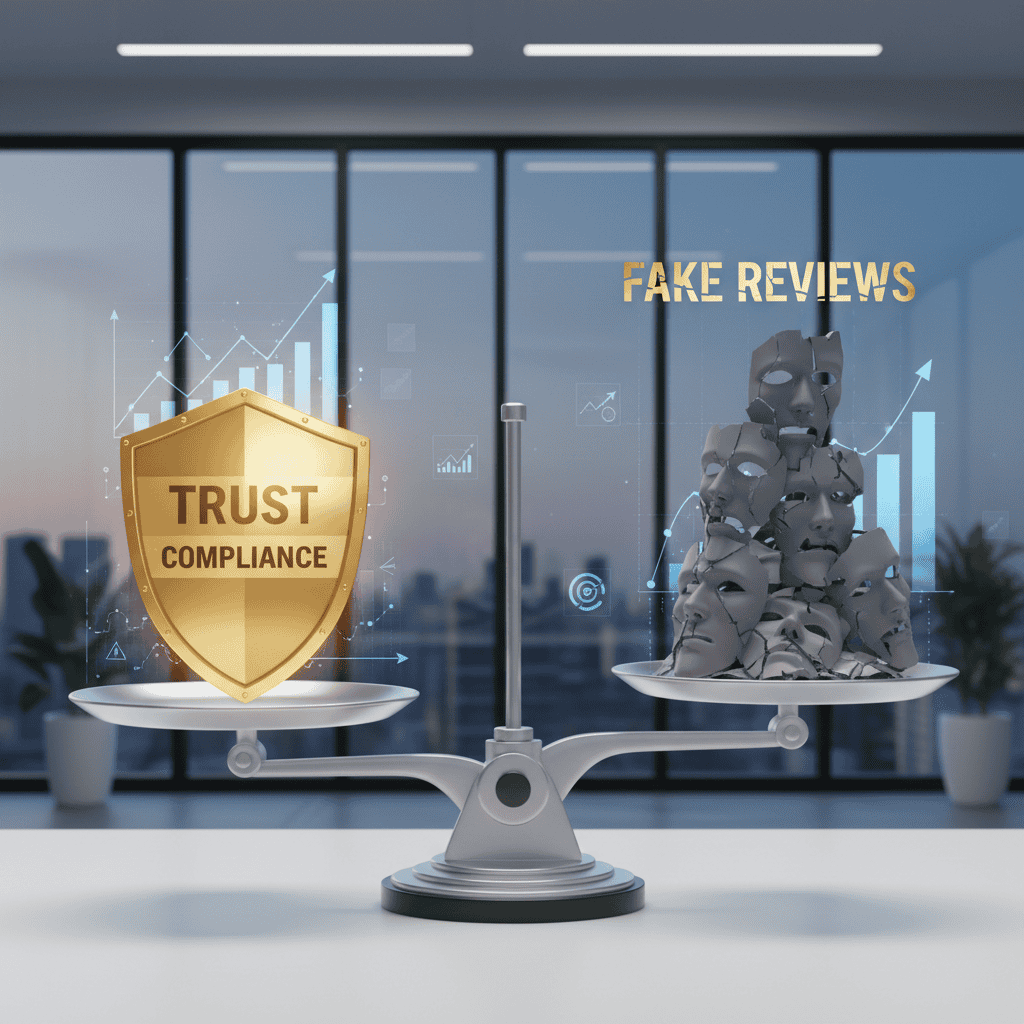
The regulation targets specific deceptive behaviors. It is no longer enough to be “generally honest”; you must strictly avoid specific prohibited acts:
- Fake Reviews: Creating, purchasing, or disseminating reviews from non-existent users or AI generators.
- Insider Reviews: failing to disclose material connections when employees or relatives post reviews.
- Review Suppression: Using intimidation or technical suppression to hide negative feedback.
Core Prohibitions Explained: What You Cannot Do
Understanding the nuance of these prohibitions is vital for managing online reputation and sentiment effectively. Many businesses accidentally violate these rules by trying to “curate” their image. Let’s break down the specific tactics that are now explicitly banned.
The Ban on Review Suppression and Gating
“Review Gating” is the practice of asking customers for feedback and only inviting those with positive experiences to leave a public review, while diverting unhappy customers to a private channel. While this feels like good customer service, the FTC views it as deceptive because it distorts the true sentiment of your customer base.
Similarly, the final rule prohibiting fake reviews also cracks down on suppression. You cannot use legal threats or intimidation to force a customer to remove a negative review. This aligns with the Consumer Review Fairness Act of 2016, but the 2024 rule adds sharper teeth and clearer penalties.
Comparative Analysis of Review Practices
To ensure you are on the right side of the law and the algorithm, review this comparison of compliant versus non-compliant strategies:
| Practice | Definition | Compliance Status | Risk Level |
|---|---|---|---|
| Review Gating | Filtering customers so only happy ones are asked for public reviews. | Prohibited | High |
| Review Hijacking | Repurposing reviews from one product (e.g., a popular item) to a different product. | Prohibited | High |
| Incentivized Reviews | Offering rewards for reviews without requiring a specific sentiment (positive/negative). | Conditional (Must disclose) | Moderate |
| Open Solicitation | Asking all customers for honest feedback regardless of their experience. | Compliant | Low |
| Employee Reviews | Staff reviewing products they work on without disclosing employment. | Prohibited | High |
The AI and Social Media Trap
As AI tools became ubiquitous, the temptation to automate reputation management grew. However, the FTC has drawn a hard line here. The use of AI to generate fake testimonials is strictly banned. This includes “sentiment injection,” where AI rewrites a user’s review to sound more positive than it was.

Fake Indicators of Influence
It is not just about text reviews. The 2024 rule specifically addresses “fake indicators of social media influence.” This refers to bot-generated likes, follows, or views. If you are buying followers to make your brand look more authoritative, you are engaging in commercial deception.
- Bot Followers: These do not count as real audience members and can trigger penalties.
- Hijacked Accounts: Using compromised accounts to leave likes or comments is illegal.
From an SEO perspective, search engines are getting better at detecting these anomalies. A sudden spike in followers with zero engagement signals manipulation, which hurts your understanding user intent metrics because you are analyzing data from bots, not humans.
How to Audit Your Reputation Strategy
If you are worried about your current standing, you need to conduct a reputation audit immediately. Here is the process I use when onboarding new clients to ensure we are building on a clean foundation.
- Inventory All Review Sources: Map out every platform where your brand is listed (Google, Yelp, Facebook, Industry-specific sites).
- Identify Insider Reviews: Check if employees, family members, or agencies have left reviews. If they have, and there is no disclosure, they must be removed or updated to include a “clear and conspicuous” disclosure.
- Analyze Solicitation Emails: Review the automated emails sent to customers. Are you asking everyone for a review, or only those who clicked “5 stars” in a survey? If it is the latter, stop immediately.
- Check for “Zombie” Reviews: Look for reviews that might have been “hijacked” or moved from old products to new ones. This is common in e-commerce but is now a major violation.
Strategies for Authentic Growth
So, how do you grow if you can’t use shortcuts? The answer lies in authenticity and responsiveness. Managing online reputation and sentiment is about engagement, not manipulation.
The Role of Responsiveness
Responding to negative reviews is more powerful than deleting them. A well-crafted response shows potential customers that you care. It turns a negative data point into a positive trust signal.
Legally Incentivizing Feedback
You can offer incentives for reviews, but you must tread carefully. According to FTC guidance on soliciting reviews, if you offer an incentive, it must be available to everyone regardless of whether their review is positive or negative. Furthermore, the review itself should disclose that an incentive was provided.
Leveraging Case Studies
Instead of relying solely on short reviews, build deep trust through detailed narratives. I often point clients to measurable growth examples where we document the problem, solution, and result. These assets are immune to “fake review” regulations because they are verifiable, data-backed stories of success.
Frequently Asked Questions
Is it legal to delete negative reviews?
Generally, no. You cannot delete reviews simply because they are negative. You can only petition platforms to remove reviews that violate their content policies (e.g., hate speech, spam, or conflict of interest). Deleting genuine negative feedback is considered review suppression.
Can I ask employees to review our products?
Yes, but with a major caveat. They must clearly and conspicuously disclose their relationship to the company (e.g., “I am an employee of [Brand]”). Failure to do so is a violation of the FTC Endorsement Guides.
What are the penalties for fake reviews?
The FTC can seek civil penalties of up to nearly $51,744 per violation. For a campaign involving thousands of fake reviews, the fines can be astronomical, not to mention the reputational damage.
How does sentiment analysis help?
Automated sentiment analysis tools help you monitor the aggregate mood of your customers. This allows you to spot trends (e.g., “shipping is slow”) and fix the root cause, rather than trying to hide the symptoms.
Conclusion
Managing online reputation and sentiment in 2026 requires a pivot from manipulation to radical transparency. The regulatory environment has tightened, and the search algorithms have followed suit. By adhering to the 16 CFR Part 465 guidelines and focusing on genuine customer engagement, you protect your business from legal risks and build a brand that withstands scrutiny.
Don’t let legacy tactics destroy your future growth. Audit your strategies today, remove the fakes, and start building a reputation that is as real as the results you deliver.