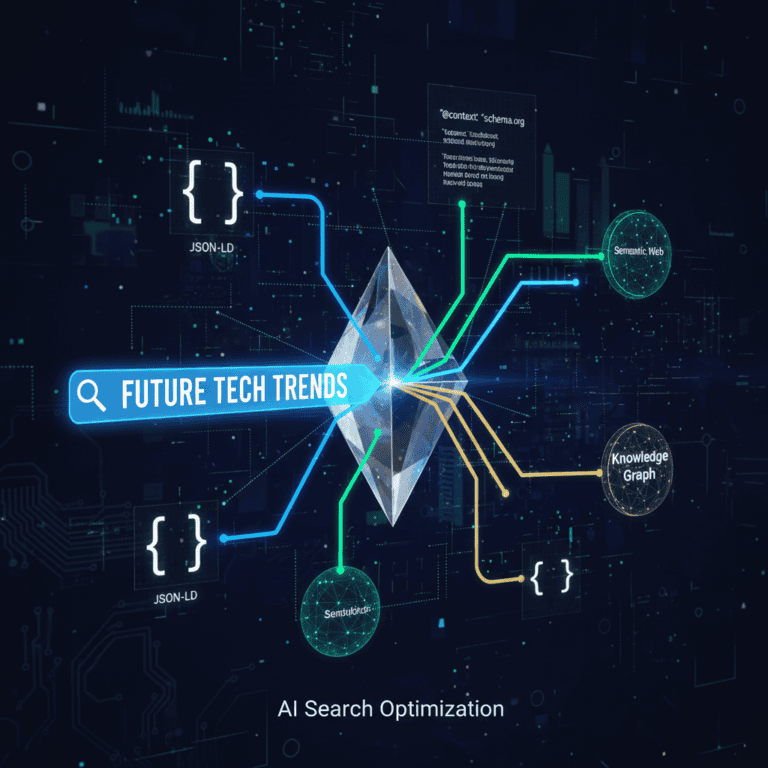
How Can AEO Help a Company Earn Visibility in Conversational Search
How can AEO help a company earn visibility in conversational search? It helps by making a company’s information easier for answer engines to understand, trust, extract, and cite when people ask questions in natural language. Instead of competing only for a blue link, a company can become part of the answer itself.
Conversational search changes the path from question to decision. A person may ask, “What accounting software works for a small retail business?” or “Which Mumbai dentist offers emergency appointments?” The answer may summarize options, explain tradeoffs, and mention only a few brands. If a company’s content is vague, inaccessible, or difficult to verify, it may not appear at all.
Table Of Contents
- What AEO Changes in Conversational Search
- Build Content That Answer Engines Can Use
- Measure and Improve Conversational Visibility
- Key Takeaways
- Frequently Asked Questions
- Sources And References
What AEO Changes In Conversational Search
AEO Turns Content Into Answer Material
Answer Engine Optimization, or AEO, is the practice of organizing website content so an answer engine can identify a useful response, assess its relevance, and potentially include or cite it in a generated answer. The goal is not merely to attract a click. It is to be present when an answer is formed.
Conductor’s explanation of AEO describes the discipline as making content a definitive response in AI powered search. That distinction matters. Search engine optimization still works to make pages discoverable and competitive in search results. AEO adds a second test: can a system lift a precise part of the page and use it responsibly in a conversational response?
A strong AEO page typically gives the answer first, then supports it. For example, a cybersecurity company answering “What is ransomware protection?” should not open with its company history. It should begin with a plain definition, explain the main controls, identify limits, and show where its service fits.
In conversational search, the most visible content is often the content that can stand on its own after being removed from the page around it.
That is why short definitions, comparison tables, clear steps, evidence, and specific claims matter. They create extractable passages that an answer engine can interpret without guessing.
Visibility Means More Than Rankings
A company can be visible in several ways: as a cited source, a named recommendation, a factual reference, or a brand included in a comparison. These outcomes are not equal.
HubSpot’s guide to AI search visibility explains that measurement should account for whether a brand appears in AI generated answers and how that brand is represented. A brand that is frequently named but described negatively has a very different outcome from a brand that is cited as a trusted option.
| Visibility Outcome | What It Means | Business Value |
|---|---|---|
| Brand mention | The company name appears in an answer | Builds awareness and recall |
| Source citation | The answer links to or identifies the company’s page | Can create trust and referral traffic |
| Recommendation | The company is presented as an option for a need | May influence consideration and leads |
| Product detail | The answer accurately describes features, pricing, or availability | Helps qualified buyers make decisions |
AEO also reaches voice search and zero click experiences. A spoken answer may provide only one or two choices. An AI generated summary may show a small group of sources. This creates a constraint: even excellent pages can be excluded when an engine selects only a limited number of answer passages.
When AEO Deserves Priority
AEO is most useful when customers make decisions through questions, comparisons, and problem solving. It deserves early attention when a business has all or most of these conditions:
• Customers ask detailed questions before contacting sales.
• The product or service has clear use cases, specifications, pricing factors, or eligibility rules.
• Competitors are already being named in conversational answers.
• The business depends on trust, such as healthcare, finance, legal services, B2B software, education, or local services.
• Buyers often compare alternatives before purchasing.
For example, a local clinic may benefit from pages that answer questions about appointment types, accepted insurance, treatment preparation, and emergency availability. An ecommerce brand may benefit more from product compatibility pages, sizing guidance, care instructions, and comparison content.
AEO may be a lower priority for a brand with no crawlable website, poor technical foundations, or no clear offer. In that case, basic SEO, accessible page content, and accurate business information should come first. AEO works best as an extension of a sound search foundation, not a substitute for one.
Build Content That Answer Engines Can Use
Match Page Types to Real Questions
Many AEO plans focus too heavily on blog posts. Blogs matter, but answer engines also pull information from product pages, service pages, help centers, pricing pages, category pages, and comparison pages. Each page type should answer the questions people naturally ask at that stage.
| Page Type | Conversational Questions It Should Answer | Useful Content Elements |
|---|---|---|
| Service page | What does this service include? Who is it for? | Scope, process, outcomes, limits, location details |
| Product page | Is this compatible with my needs? What are the specifications? | Features, dimensions, materials, compatibility, delivery details |
| Pricing page | How much does it cost and what affects the price? | Pricing ranges, inclusions, exclusions, billing terms |
| Help article | How do I solve this problem? | Numbered steps, screenshots, troubleshooting, warnings |
| Comparison page | Which option is better for a specific use case? | Fair criteria, feature tables, ideal customer scenarios |
Start each important section with a direct answer of one to three sentences. Then add supporting context, proof, examples, exceptions, and next steps. This structure respects both people who want a quick response and users who need to evaluate a decision.
Surfer’s AEO guidance supports the use of direct answers, lists, short paragraphs, clear headings, and aligned structured data to improve extractability. The key word is aligned. Schema markup should describe information that is visible on the page, not add claims a visitor cannot verify.
Build Entity Clarity and Evidence
Answer engines need to understand not only a page, but also who is making the claim. This is where entity consistency matters. A company should use the same official name, description, product names, service terms, and contact details across its key pages.
A practical entity clarity review can include:
• One canonical description of what the company does.
• Consistent naming for products, services, and locations.
• Clear About, Contact, policy, and customer support pages.
• Author or reviewer information where subject matter review is relevant.
• Accurate dates on time sensitive content, such as pricing and regulations.
• Credible sources or first party documentation for factual claims.
Consider a software firm that says “real time reporting” on one page, “daily reporting” on another, and gives no product documentation. The conflict may confuse both buyers and machines. A better approach is to define the reporting frequency, state the plan limitations, and keep the wording consistent wherever the feature is described.
Trust also comes from restraint. Avoid claims such as “best,” “leading,” or “guaranteed” unless the page provides a clear basis. Specific statements are more useful: “Supports exports in CSV and PDF formats” is easier to validate than “Offers flexible reporting.”
Make Pages Accessible and Structured
Content cannot earn visibility if systems cannot access or parse it. Important answers should be present in the page HTML, not hidden behind unnecessary scripts, login walls, or interactive elements that fail to load reliably.
Semantic HTML helps clarify page meaning. Headings should describe the section below them. Tables should use real table markup rather than screenshots. Lists should be actual lists. Images need descriptive alternative text, but key product or service details should not exist only inside an image.
Structured data can add machine readable context. FAQ, HowTo, Product, Organization, LocalBusiness, and Article markup may be relevant depending on the page. Still, markup is not a visibility guarantee. It is supporting context, not a shortcut around weak content.

Fair warning: a technically perfect schema implementation cannot rescue an unhelpful page. If visible copy says one thing while structured data says another, the mismatch can reduce confidence. Review markup whenever pricing, availability, product details, or policies change.
Measure And Improve Conversational Visibility
Separate Mentions, Citations, and Answer Share
Rank tracking alone cannot show whether a company is appearing in conversational answers. We need separate measures because a mention, a citation, and competitive prominence describe different outcomes.
| Metric | Simple Formula | What It Reveals |
|---|---|---|
| Mention rate | Prompts mentioning the brand divided by total tracked prompts | Brand awareness inside answers |
| Citation rate | Prompts citing the company’s content divided by total tracked prompts | Whether the site is being selected as a source |
| Answer share | Brand appearances divided by total appearances across tracked competitors | Competitive presence for a topic set |
| Sentiment mix | Positive, neutral, and negative mentions divided by total mentions | How the brand is characterized |
SEO.com’s AEO measurement approach describes a repeatable process of searching conversational phrases, recording whether a business is mentioned or cited, and repeating the review across answer engines. This matters because results can differ by platform, query wording, location, account settings, and timing.
Use a fixed prompt set before making changes. Include high intent questions, comparison questions, local questions, product questions, and problem solving questions. Record the date, engine, exact question, brand presence, citation status, linked page, competitors mentioned, and answer tone.
Run a Controlled Testing Workflow
A practical AEO testing cycle can be completed monthly or quarterly, depending on how quickly the business changes.
- Choose 20 to 50 questions that reflect customer language and valuable commercial topics.
- Capture a baseline across relevant answer engines before changing content.
- Group weak results by cause: missing content, vague answer, weak evidence, technical access issue, or unclear entity details.
- Update one page group at a time, such as product compatibility pages or service FAQs.
- Recheck the same questions using the same wording and document changes.
- Review referral traffic, assisted conversions, form submissions, calls, and branded search demand alongside visibility data.
Do not treat one favorable answer as proof of success. Generated answers can change quickly. A more reliable signal is a repeated improvement across a meaningful set of questions over time.
Fix the Reasons Good Pages Get Ignored
A well written page can still lose visibility for reasons that are easy to miss. The most common issue is that the answer is buried beneath promotional copy. Another is weak sourcing: the page makes a broad claim but gives no supporting explanation, data, documentation, or qualification.
Other failure patterns include:
• The page answers a broad topic while the user asks a specific question.
• Important facts are hidden in tabs, images, or scripts.
• The business uses inconsistent names, product descriptions, or location information.
• Content is outdated, especially pricing, specifications, regulations, and availability.
• Structured data does not match the visible page.
• A competitor provides a shorter, clearer, better supported answer.
Recovery starts with diagnosis. If a page is not cited, compare its answer block with the pages that are cited. Is the definition clearer? Does the competitor show evidence? Does it directly address a constraint, such as budget, location, compatibility, or risk? Improve the missing element rather than rewriting the entire page without a reason.
Adobe’s distinction between AEO and GEO is useful here: AEO emphasizes direct answer visibility, while GEO is related but broader in its focus on generated experiences. For most companies, the practical priority is simple: create pages that answer real questions accurately and make the brand easy to identify.
Key Takeaways
• AEO helps a company earn visibility in conversational search by making content easier to extract, verify, and cite in generated answers.
• SEO and AEO should work together. SEO supports discovery and technical health, while AEO improves the usefulness of answer sized content.
• Prioritize pages tied to high intent questions, comparisons, product decisions, local needs, and customer support problems.
• Build trust with consistent company details, specific claims, current information, accessible page content, and structured data that matches visible copy.
• Measure performance by engine and separate mention rate, citation rate, answer share, and sentiment rather than relying only on rankings.
• Treat AEO as an ongoing content and quality process. A single citation is encouraging, but repeatable visibility across important questions is the stronger goal.
Frequently Asked Questions
Does AEO Replace Traditional SEO?
No. AEO does not replace search engine optimization. A company still needs crawlable pages, useful content, clear site architecture, fast performance, and technical quality. AEO builds on those fundamentals by making important information easier to use in conversational answers.
Which Businesses Benefit Most From AEO?
Businesses benefit most when buyers ask detailed questions before choosing a provider or product. This often includes local services, B2B companies, ecommerce stores, healthcare providers, education businesses, software companies, and professional services. A company with simple impulse purchases may see less immediate value than one with complex customer questions.
How Do Answer Engines Decide Which Brand to Cite?
There is no public formula that applies across every system. In practice, engines appear to favor content that closely matches the question, is accessible, provides a direct answer, and has credible context. A company improves its chances by being specific, current, consistent, and easy to verify.
What Content Formats Work Best for AEO?
Direct definitions, concise answer blocks, comparison tables, numbered instructions, product specifications, FAQs, and troubleshooting guides often work well. The best format depends on the question. A “how do I” query needs steps, while a “which option” query needs clear criteria and tradeoffs.
How Do Schema Markup and Structured Data Help AEO?
Structured data gives systems additional context about page content, such as products, organizations, FAQs, and instructions. It can help interpretation when it accurately reflects the visible page. It does not guarantee a citation or override poor content, blocked access, or outdated information.
How Can a Company Get Mentioned More Often in ChatGPT, Perplexity, or Gemini?
Create pages that answer the exact questions customers ask, keep facts current, strengthen brand consistency, and publish useful supporting evidence. Then test the same question set across platforms. If a competitor appears more often, examine whether it answers more directly, offers better detail, or has clearer evidence.
Can AEO Improve Leads or Only Brand Awareness?
It can support both, but the result depends on the query and the next step. Informational answers may build awareness without an immediate visit. Service, product, comparison, and local intent questions can influence qualified leads when the answer accurately explains why the company fits the need. Track conversions and assisted conversions, not only mentions.
How Often Should AEO Content Be Updated?
Update content whenever material facts change, including prices, product specifications, availability, service areas, policies, or regulations. For evergreen pages, review them on a regular schedule. A quarterly review is often reasonable for priority commercial pages, while fast changing industries may need more frequent checks.
Sources And References
• HubSpot — Show Up in AI Search with Answer Engine Optimization: https://www.hubspot.com/products/marketing/aeo-guide
• Conductor — What is Answer Engine Optimization? AEO Explained: https://www.conductor.com/academy/answer-engine-optimization/
• SEO.com — Answer Engine Optimization (AEO): What It Is & How to Start: https://www.seo.com/ai/answer-engine-optimization/
• Surfer — Answer Engine Optimization: Your 2026 Guide: https://surferseo.com/blog/answer-engine-optimization/
• Adobe for Business — AEO vs. GEO: Differences and Examples: https://business.adobe.com/blog/aeo-vs-geo